The Digital Attention Heuristics: Supporting the User's Attention by Design
Digital Wellbeing, Deceptive Design Patterns, Design Heuristics
The HCI community has traditionally treated digital wellbeing as an end-user responsibility, designing Digital Self-Control Tools (DSCTs) that help people self-regulate how they use apps and websites. These attempts are often ineffective in the long term: they suffer from high attrition, they focus almost exclusively on reducing screen time, and — being external to the services they regulate — they cannot change the "attention-capture" designs that compromise users' sense of agency in the first place.
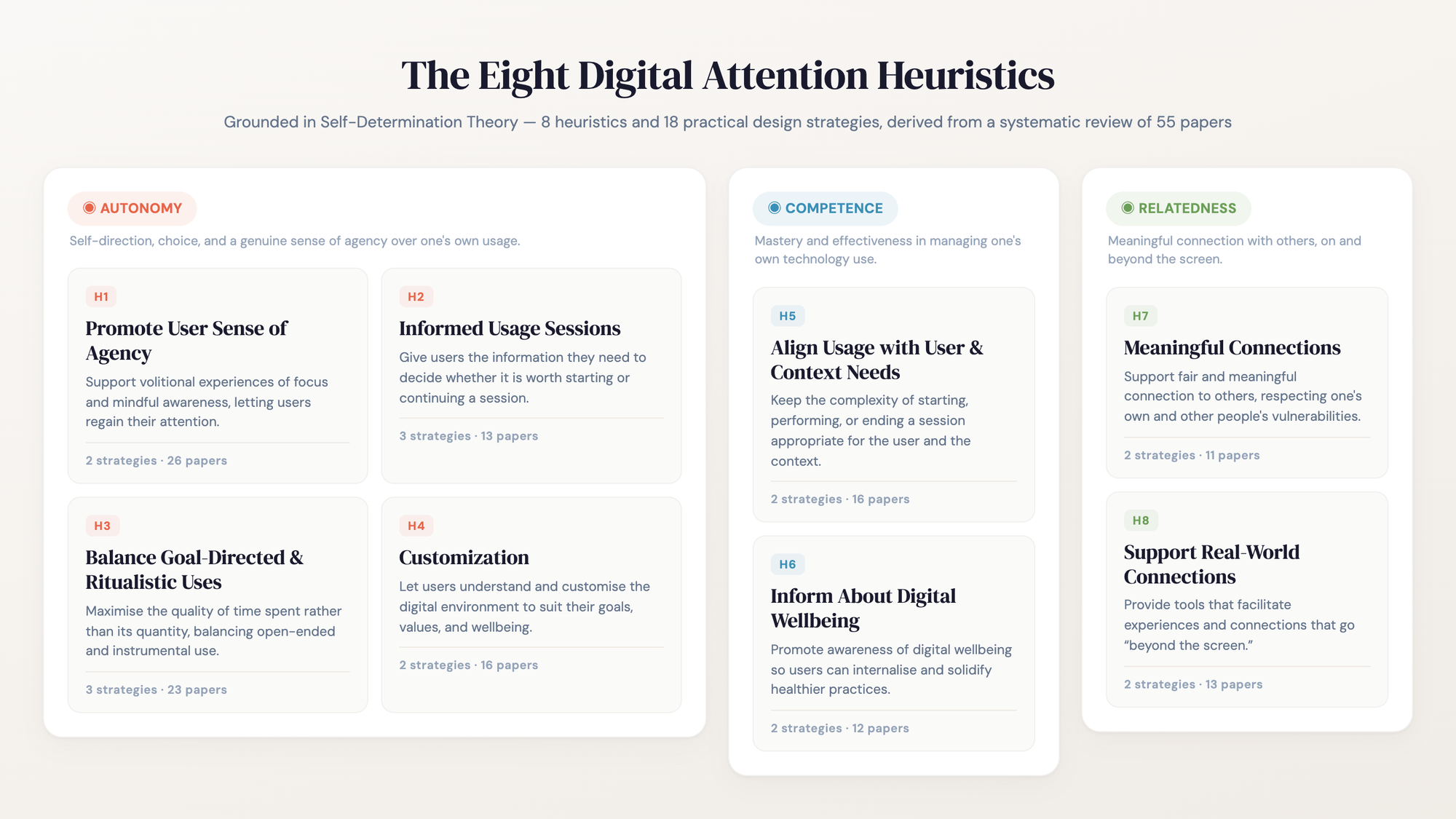
Taking a complementary perspective, the Digital Attention Heuristics move the responsibility back to design. They are a set of eight reusable, generally applicable heuristics for creating user interfaces that preserve and respect user attention by design, accompanied by 18 practical strategies and real-world implementation examples. Respecting attention here goes beyond limiting screen time: it means that technology should adapt in ways that align with the user's goals, values, and context, fostering mindful and meaningful interactions where people are not coerced into habitual or unintended usage.
From the Literature to the Heuristics
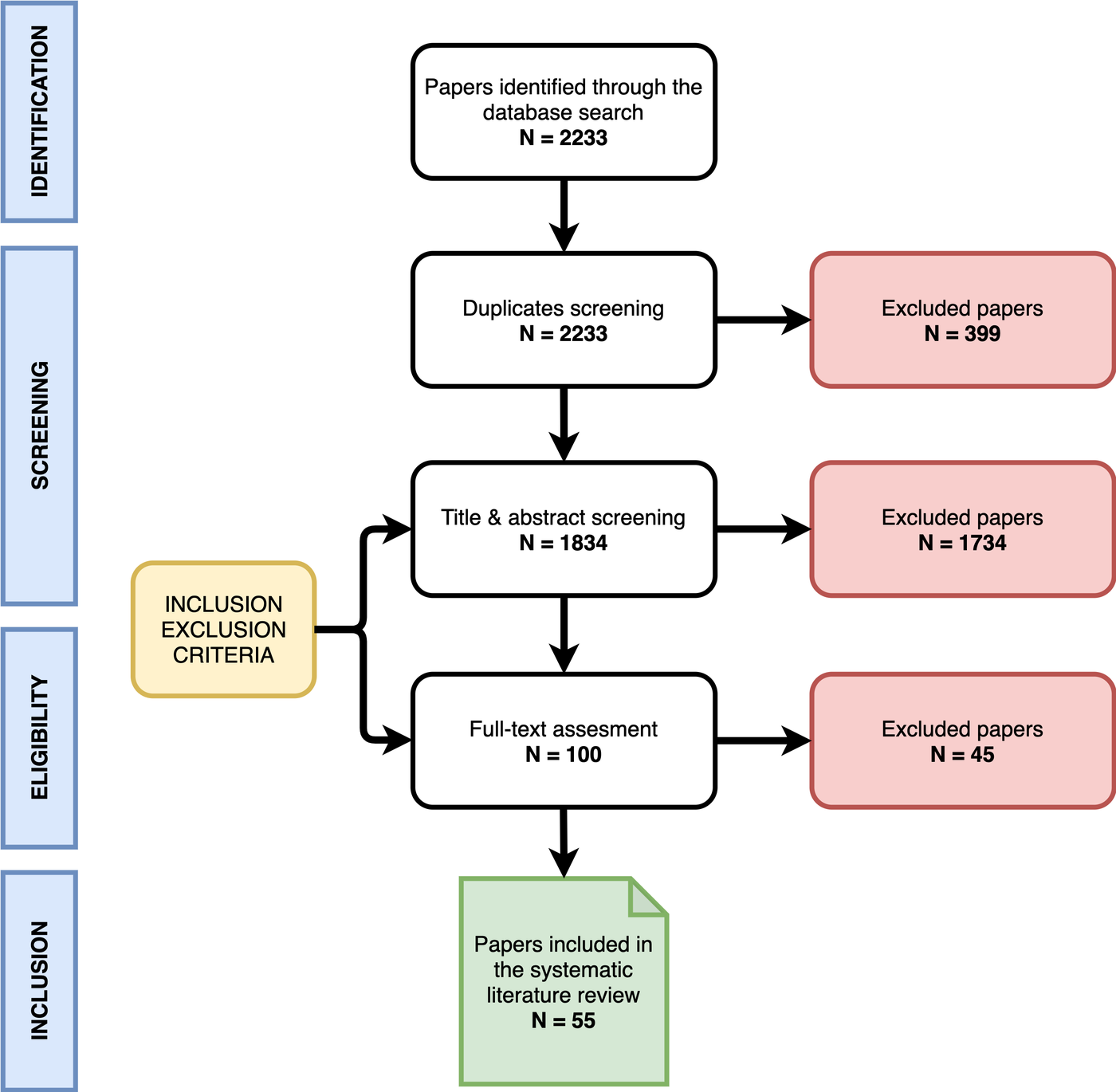
The heuristics stem from a systematic literature review of the computing and HCI literature on digital wellbeing, conducted following the PRISMA guidelines. We searched the ACM Guide to the Computing Literature with 12 queries combining terms like "digital wellbeing," "attention economy," and "dark pattern" with "design," "guideline," and "principle," covering articles published between January 2000 and June 2023. Of the 2,233 papers retrieved, 399 duplicates were removed, title-and-abstract screening left 100 candidates, and a full-text assessment produced a final corpus of 55 papers (43 conference papers and 12 journal articles, 26 of them from CHI). We then extracted design recommendations, implementation examples, and design evaluations from each paper, and ran an open coding process with two independent researchers, grouping codes into heuristics and strategies. A third researcher independently reviewed the final set.
Following the criteria adopted for state-of-the-art heuristics such as the Human-AI Interaction Guidelines and the Wellbeing Supportive Design Heuristics, each heuristic has a short title and a one-sentence description, and adopts a "beneficence" approach: rather than only checking for violations, the heuristics are framed around promoting positive experiences, so that they can be applied proactively during design. In line with this, we deliberately separate heuristics — overarching principles that guide the design philosophy — from strategies, the concrete steps that implement them.
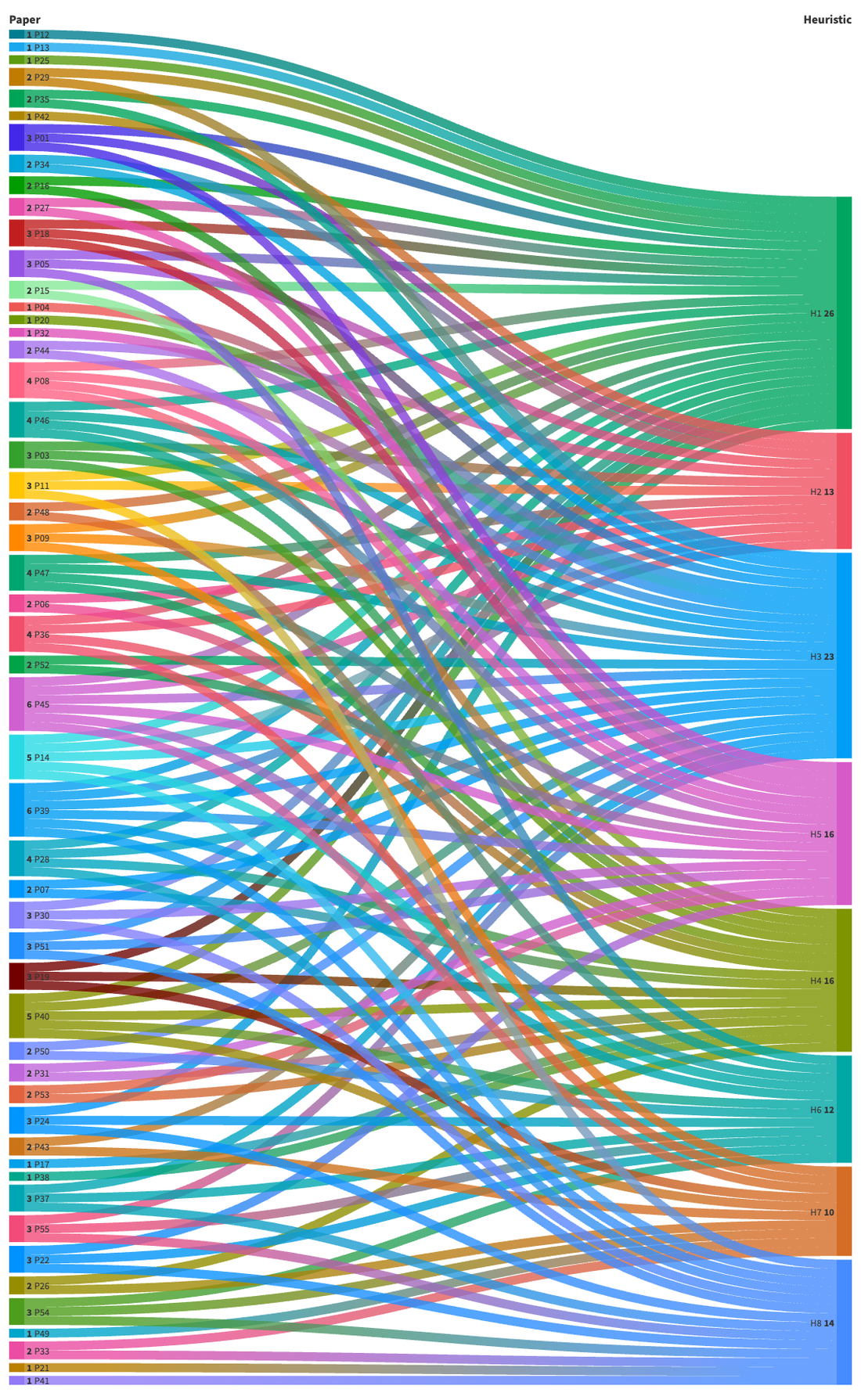
The Sankey diagram illustrates how the 55 papers in the corpus map onto the heuristics they informed. Some papers were focused, contributing to a single heuristic, while others presented multifaceted insights that gave rise to several of them. The mapping is also uneven across heuristics: promoting the user's sense of agency (H1, 26 papers) and balancing goal-directed and ritualistic uses (H3, 23 papers) are the most densely supported, reflecting how much of the digital wellbeing literature revolves around control and the quality of time spent, while heuristics about relatedness rest on a smaller but distinct body of work.
The Eight Heuristics
The heuristics are categorized using the Self-Determination Theory (SDT), which posits that humans have three fundamental psychological needs — autonomy, competence, and relatedness — that are vital for motivation, wellbeing, and personal growth. SDT was chosen for its extensive empirical support, its validated assessment tools, and the suitability of its three needs as design objectives. The resulting categorization yields four heuristics for autonomy, two for competence, and two for relatedness. The three needs are interdependent, so the heuristics complement each other and are not mutually exclusive.
| Heuristic | Description | Strategies | |
|---|---|---|---|
| H1 | Promote user sense of agency | Design to support volitional experiences of focus and mindful awareness, allowing users to exercise their sense of agency and regain attention. | 2 |
| H2 | Informed usage sessions | Provide the user with the information necessary for deciding whether it is worth starting or continuing a usage session, with a transparent design that is clear about intentions and honest in actions. | 3 |
| H3 | Balance goal-directed and ritualistic uses | Adopt designs that let users maximize the quality of time spent rather than the quantity, balancing ritualistic use (open-ended, diversionary) with instrumental use (goal-directed, informational). | 3 |
| H4 | Customization | Ensure that users can understand and customize the digital environment they interact with, to better suit their goals, values, and digital wellbeing. | 2 |
| H5 | Align usage with user and context needs | Ensure the level of complexity or challenge required to start, perform, or end a usage session is appropriate for the user and the context. | 2 |
| H6 | Inform about digital wellbeing | Promote awareness about digital wellbeing, allowing users to understand and internalize good practices or solidify existing safe behaviors. | 2 |
| H7 | Meaningful connections | Support experiences of meaningful and fair connection to others, respecting one's preferences and vulnerabilities and those of others. | 2 |
| H8 | Support real-world connections | Provide tools that facilitate real-world experiences and connections that go, or may go, "beyond the screen." | 2 |
H1–H4 support autonomy, H5–H6 support competence, and H7–H8 support relatedness.
Each heuristic is unpacked into practical strategies. To support agency (H1), for instance, interfaces can provide self-regulation tools (H1-S1) and adopt positive friction mechanisms that prompt reflection and disrupt automatic behavior (H1-S2). To balance ritualistic and goal-directed use (H3), designers can simplify and organize the interface while minimizing attention-capture patterns like infinite scroll and autoplay (H3-S1), let users make lightweight plans that guide their sessions (H3-S2), and connect usage to larger life goals (H3-S3). Every strategy is grounded in the corpus and paired with implementation examples from prior research and existing digital services — from Medium's estimated read time and X's "Following" tab, to Mastodon's options for disabling attention-capture patterns and WHISPER, an audio narrative box that supports co-located conversation.
The Digital Attention Heuristics Evaluator
Beyond designing new interfaces, the heuristics are also a tool for critically evaluating existing ones. The Digital Attention Heuristics Evaluator is a web application that turns the eight heuristics into a structured heuristic evaluation workflow: designers and researchers can walk through an interface, assess it against each heuristic, and export a shareable report.
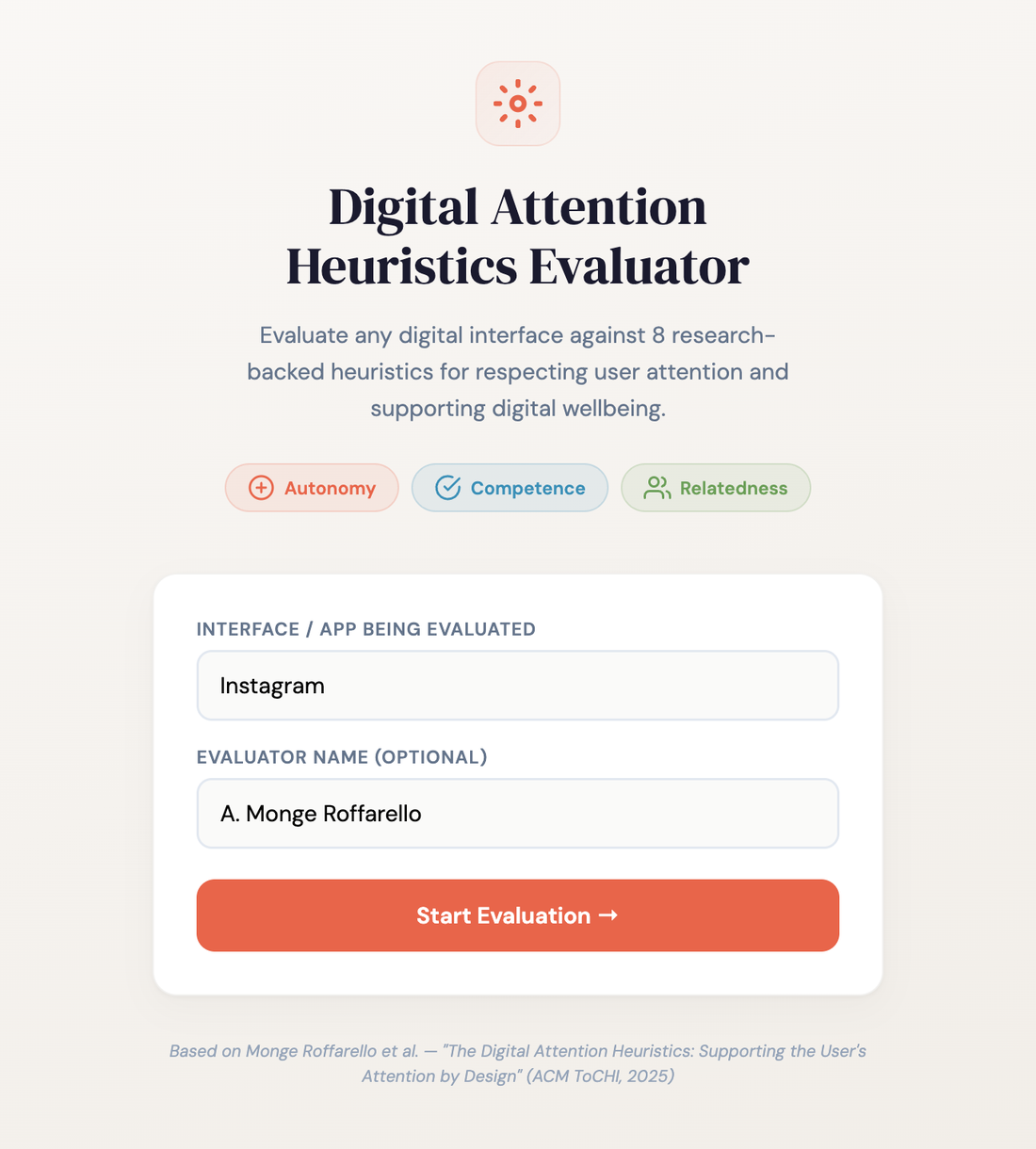
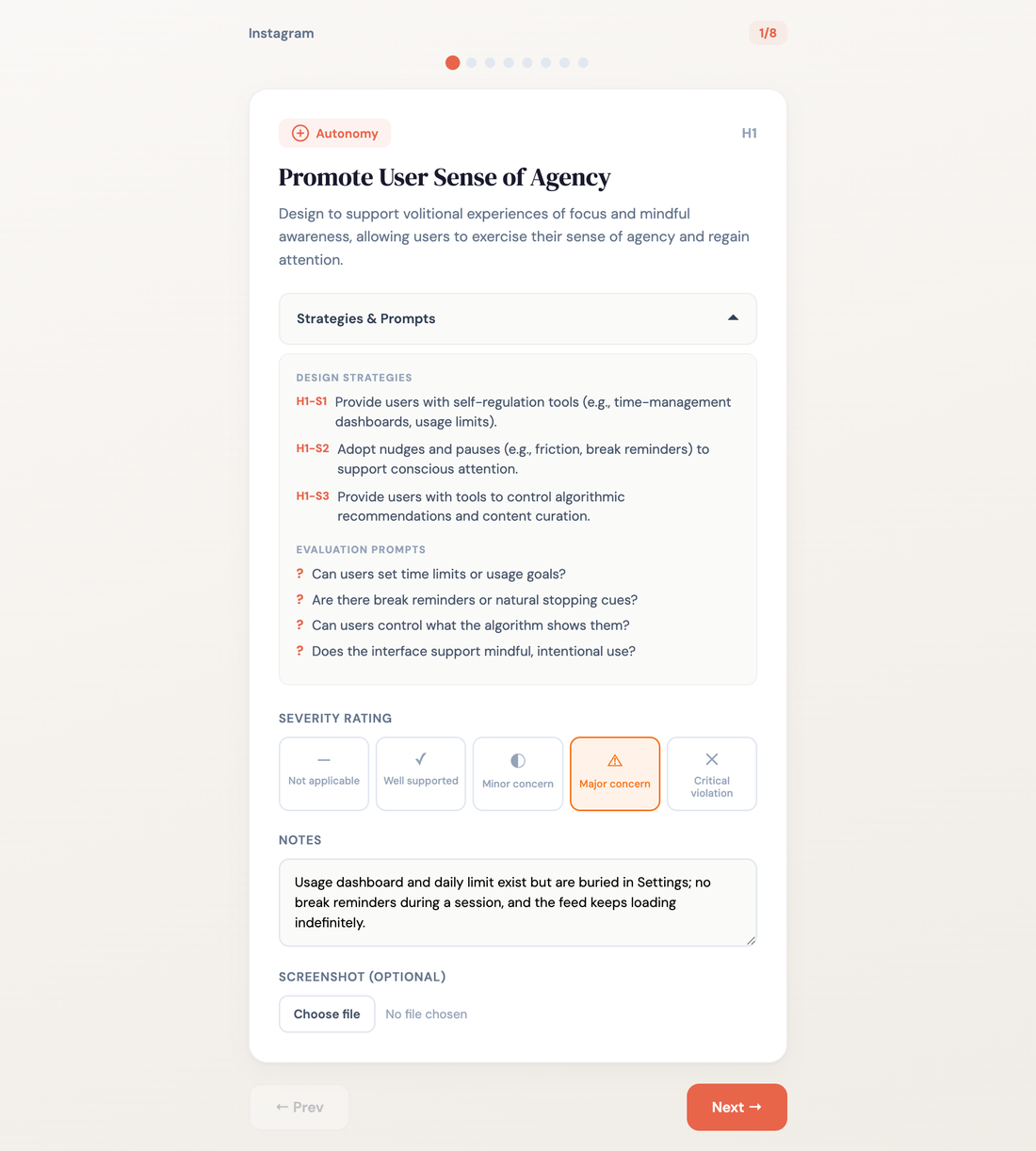
An evaluation starts by naming the interface under analysis and, optionally, the evaluator. The tool then guides the assessment one heuristic at a time, keeping the three SDT needs — Autonomy, Competence, and Relatedness — visible throughout, so that the evaluator always knows which psychological need the current heuristic is meant to serve. Progress is tracked with a dot navigator, and heuristics can be revisited in any order.
For each heuristic, the tool shows its description, the associated design strategies, and a set of concrete evaluation prompts ("Can users set time limits or usage goals?", "Are there break reminders or natural stopping cues?") that translate the heuristic into questions an evaluator can actually answer while inspecting an interface. The evaluator then assigns a severity rating — from well supported to critical violation — and can record free-text notes and upload a screenshot as evidence for the finding.
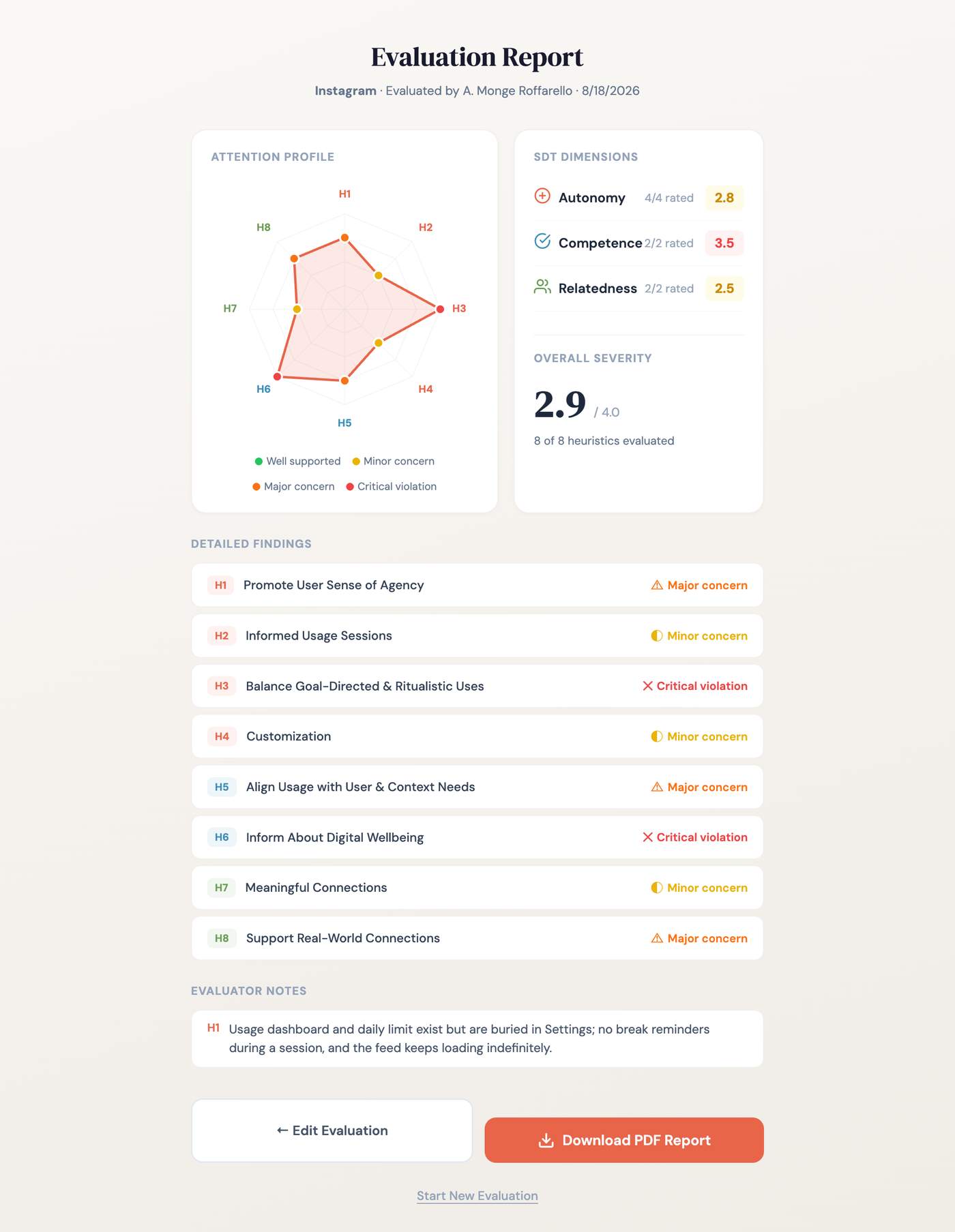
Once the walkthrough is complete, the tool produces an evaluation report: a radar chart of the attention profile across the eight heuristics, aggregate severity scores broken down by the three SDT dimensions, and the detailed findings with notes and screenshot evidence. The report can be exported as a PDF to be shared with a design team or attached to a design review.
Pathways for Impact
The heuristics have implications that go beyond individual designers. For end users, a shared vocabulary for attention-respecting design makes it easier to recognize — and demand alternatives to — interfaces that exploit their attention. For companies and regulators, the heuristics offer a bridge between design practice and a regulatory landscape, such as the EU's Digital Services Act, that is beginning to address manipulative design at the level of specific patterns.
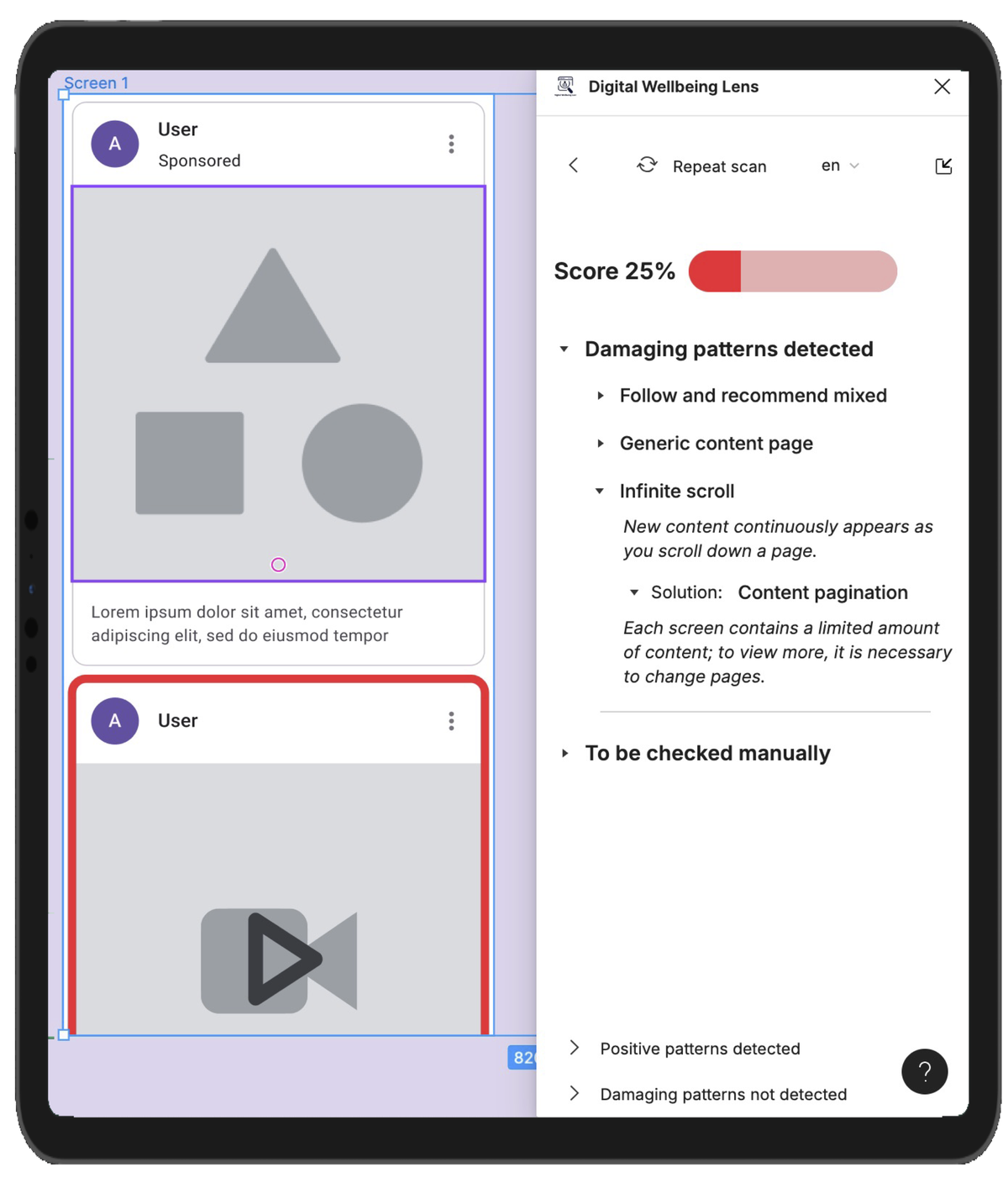
The heuristics have already inspired further tools that bring them into the design workflow. EDDI is a prototype of an online platform that lets designers explore ethical design practices derived from the heuristics, understand their pros and cons, and browse and rate prototypes shared by the community. Digital Wellbeing Lens — shown here — is a Figma plugin that scans a prototype and computes a digital wellbeing score: it detects attention-capture damaging patterns such as infinite scroll and suggests alternatives (e.g., content pagination), while also highlighting positive practices that preserve attention, such as videos that start only after an explicit interaction.
We hope these heuristics will not only guide the creation of user interfaces, but also foster a mindset shift within the design community — a more conscientious approach that prioritizes respect for the user's attention throughout the entire design process.
Publication
Alberto Monge Roffarello, Luigi De Russis, and Kai Lukoff. 2025. The Digital Attention Heuristics: Supporting the User's Attention by Design. ACM Transactions on Computer-Human Interaction, DOI: https://doi.org/10.1145/3725215
Supplementary materials — the corpus of reviewed papers, the initial set of codes, and the final set of heuristics, strategies, and implementation examples — are available on OSF.