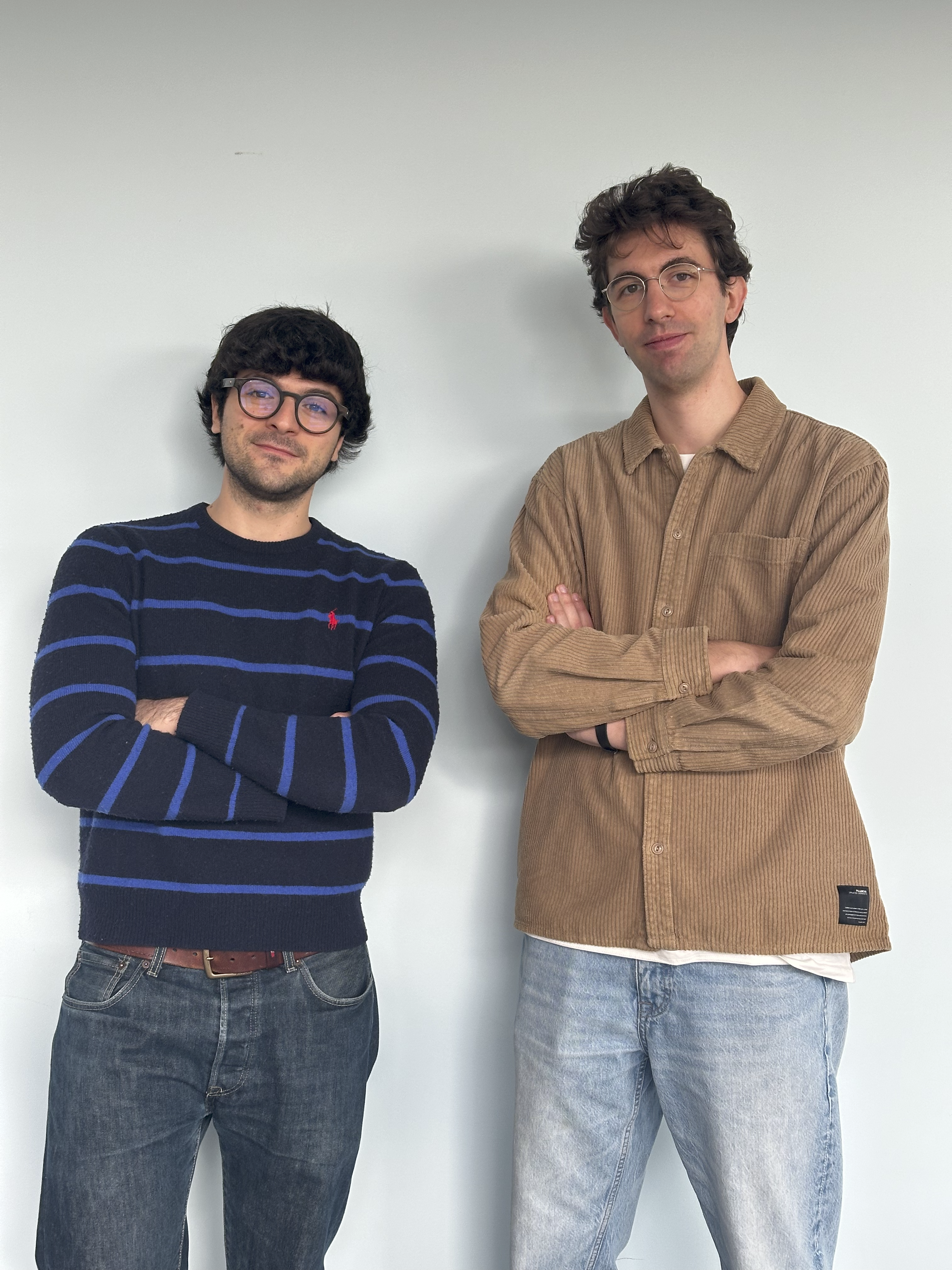
The contributions come from both current and former group members, as well as international collaborators. Luigi, Alberto, Tommaso, Luca, Francesca, Andrea S., Riccardo, Giuseppe, and Andrea D.L. will be there in person. If you see any of us, feel free to say hello: we're always happy to chat! 😊
The team will present two full papers (🏅), a TOCHI paper, six posters, and three workshop papers, along with organising a workshop and participating in the Student Mentoring Program.
1 / 15
news
The e-Lite group will be at the ACM CHI conference in Barcelona!
April 13-17, 2026
news
What is Digital Wellbeing? A Leverage Points Framework to Guide Research and Action
📄 FULL PAPER🏅 Honorable Mention
Monge Roffarello, Molino, De Russis
Friday 17 April
9:00-10:30
Room 112
Digital Wellbeing Frameworks and Design Strategies
news
When Handwriting Goes Social: Creativity, Anonymity, and Communication in Graphonymous Online Spaces
📄 FULL PAPER🏅 Honorable Mention
Purohit, Upadhyaya, Ruiz, Monge Roffarello, Heuer
Friday 17 April
9:00-10:30
Room 112
Digital Wellbeing Frameworks and Design Strategies
news
The Digital Attention Heuristics: Supporting the User's Attention by Design
📄 TOCHI PAPER
Monge Roffarello, De Russis, Lukoff
Monday 13 April
16:30-18:00
Room M211/212
Cognition Uncertainty and Tool Support
news
Am I in Control? How the Design of the TikTok Feed Shapes Users' Sense of Agency
📝 POSTER
Monge Roffarello, De Luca
Wednesday 15 April
14:15-18:00
Area 1+2+3: posters
news
CAT-AI: Supporting Teacher Workflows with AI-Assisted Exercise Creation
📝 POSTER
Calò, Cuccu, De Russis
Thursday 16 April
14:15-18:00
Area 1+2+3: posters
news
From Text-First to Structure-First: A Visual Pipeline for Narrative Writing
📝 POSTER
Sillano, Calò, De Russis
Thursday 16 April
14:15-18:00
Area 1+2+3: posters
news
Investigating Web Project Assessment in an AI World
📝 POSTER
Russo, Saénz Moreno, De Russis
Wednesday 15 April
14:15-18:00
Area 1+2+3: posters
news
Measuring the Semantic Accessibility Gap in LLM-Generated Web UIs
📝 POSTER
Calò, Gurita, De Russis
Tuesday 14 April
14:15-18:00
Area 1+2+3: posters
news
WebUI-95: A Large-Scale Dataset of Normalized Web Interfaces via UI-to-Code Generation
📝 POSTER
Calò, De Russis
Wednesday 15 April
14:15-18:00
Area 1+2+3: posters
news
Supporting Young People Digital Awareness through Novel Interactive Systems
🎓 SMP POSTER
Scibetta
Wednesday 15 April
14:15-18:00
Banquet Hall
Student Mentoring Program: Dissertation Research Roundtable
news
Bridge Over Troubled Water: Aligning Commercial Incentives With Ethical Design Practice To Combat Deceptive Patterns
Rob Schwartz will present the paper titled "Intervention Design at the Intersection of Accessibility and Digital Wellbeing," a work that explores how interventions for digital wellbeing can be designed to support both individuals with cognitive/learning disabilities and those seeking better digital self-control.
We are pleased to announce the publication of our article, MorphGUI: Real-Time GUI Customization with Large Language Models in the Elsevier International Journal of Human-Computer Studies (IJHCS).
Authored by Tommaso Calò, Andrea Sillano, and Luigi De Russis, the work introduces MorphGUI, a novel framework designed to change how users personalize graphical user interfaces.
The framework was evaluated through a use-case implementation with a calendar application and a user study involving 18 participants.
This year, we welcome two new PhD students to the group: Andrea Sillano and Riccardo Graziosi. They will be working in the areas of digital wellbeing and human-centred AI.
On November 12, 2025, Alberto participated as a panellist in the ECAT Research Workshop 2025, held in Seville, Spain. The workshop was organized by the European Centre for Algorithmic Transparency (ECAT), which provides technical and scientific expertise for the enforcement of the Digital Services Act (DSA).
Alberto participated in the panel discussion "A captive audience? Social media addiction and the features that make it hard for children to leave" alongside Dr Susanne Baumgartner (Assistant Professor, University of Amsterdam) and Dr Elisa Benedetti (Researcher, Laboratory of Epidemiology, Institute of Clinical Physiology, Italian National Research Council). The session was chaired by Dr Astrid Bertrand, Scientific Officer at ECAT.
Luca, Francesca, and Luigi attended the entire conference and particularly the Doctoral Consortium session during which both Luca and Francesca presented their works recieving feedback and precious suggestions from experts and peers.
Luca presented "Novel Interactive Systems Promoting More Intentional Technology Use", joining and linking the works he has done during his first year and half of PhD along with the future works that will follow them.
Francesca presented "Supporting, not Solving: Human-Centered AI Systems in Education", where she shared her initial works explored during her first year of PhD followed by many ideas of new possible directions to undergo.
We are excited to announce that our latest research, Intelligent Support for Digital Wellbeing: a Design Framework through a Systematic Literature Review, has been published in the prestigious Elsevier International Journal of Human-Computer Studies (IJHCS). The research, led by Luca Scibetta, Massimiliano Pellegrino, Alberto Monge Roffarello, and Luigi De Russis from the e-Lite group, introduces a design framework of 6 dimensions and 23 sub-dimensions providing a guide for the design of AI-powered digital wellbeing applications.
The paper reflects on how to apply AIs to digital wellbeing, accounting for the sensitivity of the topic to ensure that users are protected. Designers need to put great attention on the use of AI in this field: while there is a need for respecting the users, it is possible to exploit the flexibility of AI to improve current digital wellbeing tools, making them personalised and adaptive to user specific needs. Our design framework provides a set of aspects that require serious attention for a well-considered choice along with reflections over the available options.
Venerdì 26 settembre, dalle 17:00 a mezzanotte, parteciperemo alla Notte Europea delle Ricercatrici e dei Ricercatori a Torino, nei pressi del Castello del Valentino, con un Laboratorio di Ricerca intitolato "Digitalmente umani: la tecnologia centrata sulle persone".