Participation at AVI 2026

The e-Lite group (Giuseppe and Luigi, and I) will attend the 18th International Conference on Advanced Visual Interfaces (AVI '26), held from June 10-12, 2026, in Venice, Italy.
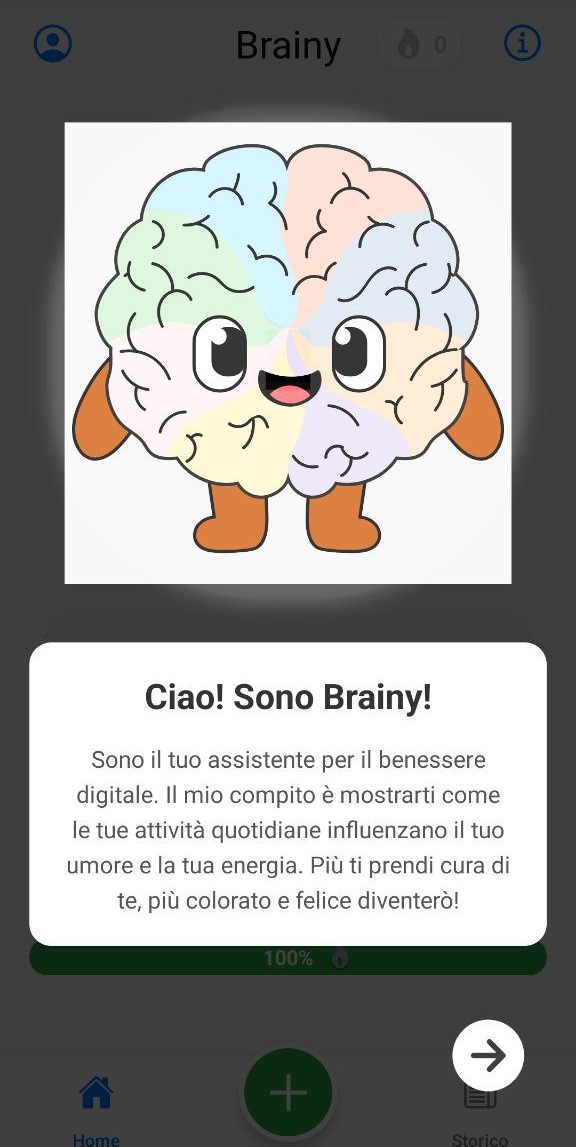
I will present "Brainy: A Virtual Pet Encouraging Digital Wellbeing", a short paper exploring how a gamified approach to digital wellbeing can encourage healthier digital behaviors leveraging a virtual pet whose health is linked to the user's habits.
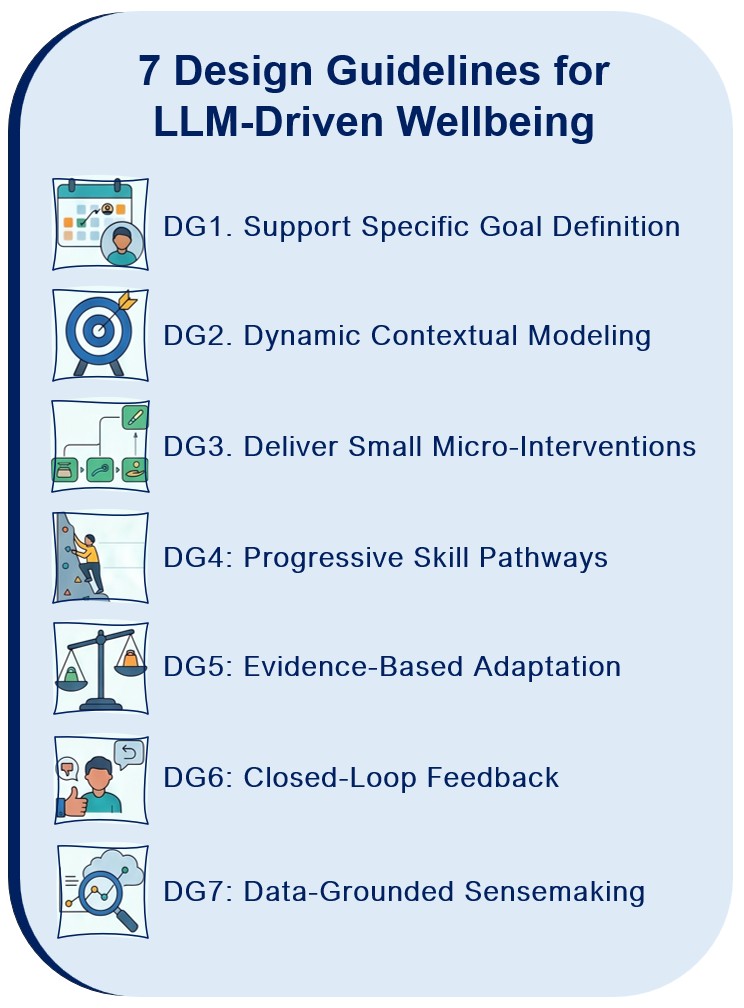
Giuseppe will present the poster titled "Towards Design Guidelines to Support Young Adults' Digital Wellbeing with Large Language Models", a work that explores how LLMs can be integrated to bridge the gap in digital wellbeing applications, moving beyond one-size-fits-all systems by leveraging their personalization capabilities.
The two contributions are detailed below.
Brainy: a Virtual Pet Encouraging Digital Wellbeing
While many approaches aimed at improving digital wellbeing primarily focus on screen time, this work explores an alternative perspective centered on users’ emotional awareness and reflection. The research investigates how encouraging individuals to reflect on the emotional consequences of their digital habits can foster more conscious and balanced technology use.
To support this process, we introduce a virtual companion designed as a small brain pet whose health and happiness evolve according to the user’s online and offline activities. The companion mirrors the potential impact of these habits on the user’s own wellbeing, with the goal of motivating healthier behaviors. To sustain positive habits over time, the system integrates gamification mechanics such as streaks and a daily wellbeing bar.
Towards Design Guidelines to Support Young Adults' Digital Wellbeing with Large Language Models
While a growing number of applications aim to address users' digital wellbeing, their long-term effectiveness remains limited, as they often rely on rigid, one-size-fits-all interventions that fail to adapt to users' evolving needs and contexts. This research bridges that gap by investigating how LLMs can be integrated to support personalized, context-aware content generation.
In this work, we propose seven design guidelines to support young adults' digital wellbeing with Large Language Models. These guidelines conceptualize digital wellbeing support as a progressive, adaptive, and personalized pathway, emphasizing gradual behavior change, reflection, and increasing user autonomy.
Additional information:
- AVI 2026 Main Page
- AVI 2026 Program
- Brainy: a Virtual Pet Encouraging Digital Wellbeing by Luca Scibetta & Alberto Monge Roffarello
- DOI: 10.1145/3811427.3811476
- Get it from PORTO@IRIS
- Towards Design Guidelines to Support Young Adults' Digital Wellbeing with Large Language Models by Giuseppe Arbore & Luigi De Russis
- DOI: 10.1145/3811427.3811525
- Get it from PORTO@IRIS